African University College of Communication
About
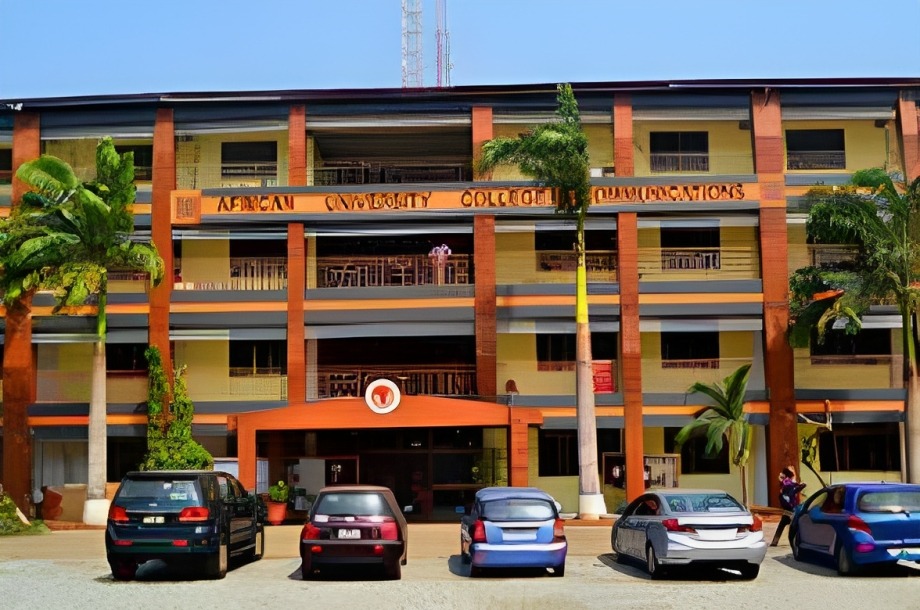
African university college of communications (aucc), formerly known as the Africa Institute of Journalism & Communications (AIJC), is a private tertiary institution established in 2002 by Hon. Kojo Yankah, former editor of Ghana’s widest circulation newspaper, the Daily Graphic, nine years Director of the Ghana Institute of Journalism, seven years Minister of State, and eight years Member of Parliament.
Campus & amenities
Lecture Halls, Student housing Student organizations, Academic resources, Career services Health services, Recreational activities, Student discounts, Cultural events, Clubs and organizations, Convenience stores, Counseling services, Recreational facilities, Libraries, Technology resources, Sponsorships and Grants, Wi-Fi Access, Laboratories
Programmes
8 programmes offered
Development Communication
Training in this programme is intended to enhance the use of communication as a tool for strategic intervention to promote and support social development. Customized to meet the needs of governmental and non-governmental organizations, international agencies, and professional bodies in the areas of development, the department is geared towards producing media professionals who are knowledgeable in issues of development and interested in utilizing information and communication systems and processes to advocate for specific development projects, and to facilitate and promote national, regional and community development. Development communication is a challenging programme that combines development theory and practical application. The curriculum includes theoretical immersion in pertinent areas of national development, such as science and health policies, economic development, environment studies, gender issues, training in applied research methods and training in communication campaigns geared towards policy implementation and change in society. Students are required to demonstrate proficiency in a number of areas – theoretical understanding of developmental issues, research methods, media campaign and advocacy planning, and proficiency in use of particular media of communication. In their final year, students work to design and execute a formal communication campaign on a particular developmental issue in a community.
Journalism
The professional journalism track prepares students for careers such as news reporting, editing and production. The track is based on a liberal arts foundation, knowledge of the social context in which the professions are practiced, and the skills and experiences needed to succeed in the marketplace of print, broadcast, online and multimedia journalism. The programme includes courses such as news gathering, reporting and writing, public affairs and in-depth reporting, investigative and interpretative reporting, reporting and writing for the electronic and online media, and print and digital media page planning and radio and television production. Graduates from this programme will qualify for positions as reporters, editors, and producers in the print, broadcast, online and multimedia journalism industry. This track is for students who love to write, work under the pressure of deadlines, and ask tough questions. To successfully complete the B.A. in the journalism track, students must also complete the school's liberal studies, pre-major preparatory, communication theories, and internship requirements. To successfully complete the B.A. in the Development Communication track, students must also complete the school's liberal studies, pre-major preparatory, communication theories, and project requirements.
Strategic Communication
The Strategic Communication track prepares students for careers in advertising and public relations. The track is based on a liberal arts foundation and the skills and experiences needed to succeed in the marketplace of advertising and public relations. Graduates from this programme qualify for positions in corporate communications and public relations and marketing set ups, in the creative and account sides of advertising businesses, agencies, and other media environment. Students in the strategic communication track combine advertising or public relations focus. To successfully complete the B.A. track in strategic communication, students must also complete the school's liberal studies, pre-major preparatory, communication theories, and internship requirements.
Visual & Digital Communication
The visual & digital communication track is designed to provide students with realistic, professional based training in visual communication and digital media, while at the same time providing a strong liberals arts and cultural background for a strong scholarly education foundation. Professional training is offered in informational graphics and publication design, interactive multimedia, and photojournalism for newspapers, magazines, television and online media. Given the increasing convergence that characterizes new digital and visual media, students are encouraged to develop skills in at least two areas of visual and digital media creation. After completing the emphasis core requirements, students will select a combination of introductory and advanced courses that will give them specialization in two of the following areas such as photojournalism, web design, multimedia production, television documentary production. To successfully complete the B.A. in the visual and digital communication track, students must also complete the school's liberal studies, pre-major preparatory, communication theories, and internship requirements.
ACCOUNTING
The BSc Administration programme in Accounting emphasizes rigorous, innovative and analytical educational training aimed at preparing students for a world of employment in addition to empowering them as potential financial managers, financial consultants, administrators, entrepreneurs, wealth creators and ultimately employers. The major aim of the programme is to address the current need for accountants and financial managers who can help solve the financial crises of the Ghanaian economy and the world at large. Upon completion of our programme, our students will have a strong quantitative background, most typically in mathematics, economics, accounting, and finance. Objectives To recruit and retain students who demonstrate the potential for success in the field of accountancy. To enhance students’ oral and written communication skills, and convey to them technical accounting information and analytical skills through excellence in teaching. To enhance the relevance and timeliness of instruction, as well as the technical competency of faculty, by conducting applied research and developing innovative educational materials and techniques. To provide frequent and meaningful opportunities for faculty and students to interact with members of the profession. To engender in students through classroom and other experiences appropriate ethical and professional behavior; a desire for life-long learning; and respect for diverse demographic and cultural backgrounds. To provide students with the appropriate and relevant skills and knowledge for post-qualification application in the real world of accounting. To provide students with the ability to set up and operate a simple accounting system appropriate for their business. To foster an environment for students and graduates that is conducive to successful job placement and career development. To seek continuous improvement in the program through faculty development and by regularly evaluating and updating curriculum.
PROJECT MANAGEMENT
To achieve their financial goals, companies rely on qualified finance professionals to make important economic decisions. The programme prepares students to make viable contributions to the financial services industry with innovative banking and finance practices. The programme also equips graduates with the ability to provide analytical information to investors, policy-makers, regulators, and other decision-makers to facilitate the allocation of resources in society. The BSc Business Administration in Banking and Finance degree program is designed to prepare students to leverage assets, manage budgets, achieve financial efficiencies, and maximize investments. With courses ranging from financial reporting and analysis to international finance and investments, this bachelorate degree program in Banking and Finance provides students the opportunity to develop their analytical and quantitative capabilities equipping them to pursue a career in the field of banking and finance. Objectives 1. Enable students to understand the use of financial models and appreciate their practical relevance to financial institutions 2. Impart to students how a firm's future financial needs are predicted based on a sales forecast which entails the construction of a pro forma 3. income statement and balance sheet. 4. Empower students to use capital rationing techniques to assist them to utilize limiting factors efficiently and improve upon profitability in business decision-making 5. Develop in students the knowledge and skills needed to critically appraise information contained in a published company report and accounts 6. Understand the monetary system of Ghana and its relationship with the rest of the economy 7. Enable students to examine the conduct of financial operations in a variety of settings.
Admissions
Contact
Apply
Contact the admissions office directly to request application materials.